Chapter 03 / Projects

What I've built

Four chapters of building: personal projects that push my limits, professional client work, open-source contributions, and community initiatives. As a founder transitioning to product management, these experiences have prepared me to step in, collaborate, and grow alongside an ambitious team.

03 Projects illustration
Group A

Personal Projects

Two products I conceived, designed and built end to end — for myself, on my own terms. Each opens with a screenshot tour and a short audio intro; expand any card for the full story and the rest of its podcast series.

01 / Personal · Self-hosted AI dashboardIn progress · Tailnet2026
2026

Devalogam

Realm of the gods — a self-evolving, private AI command center
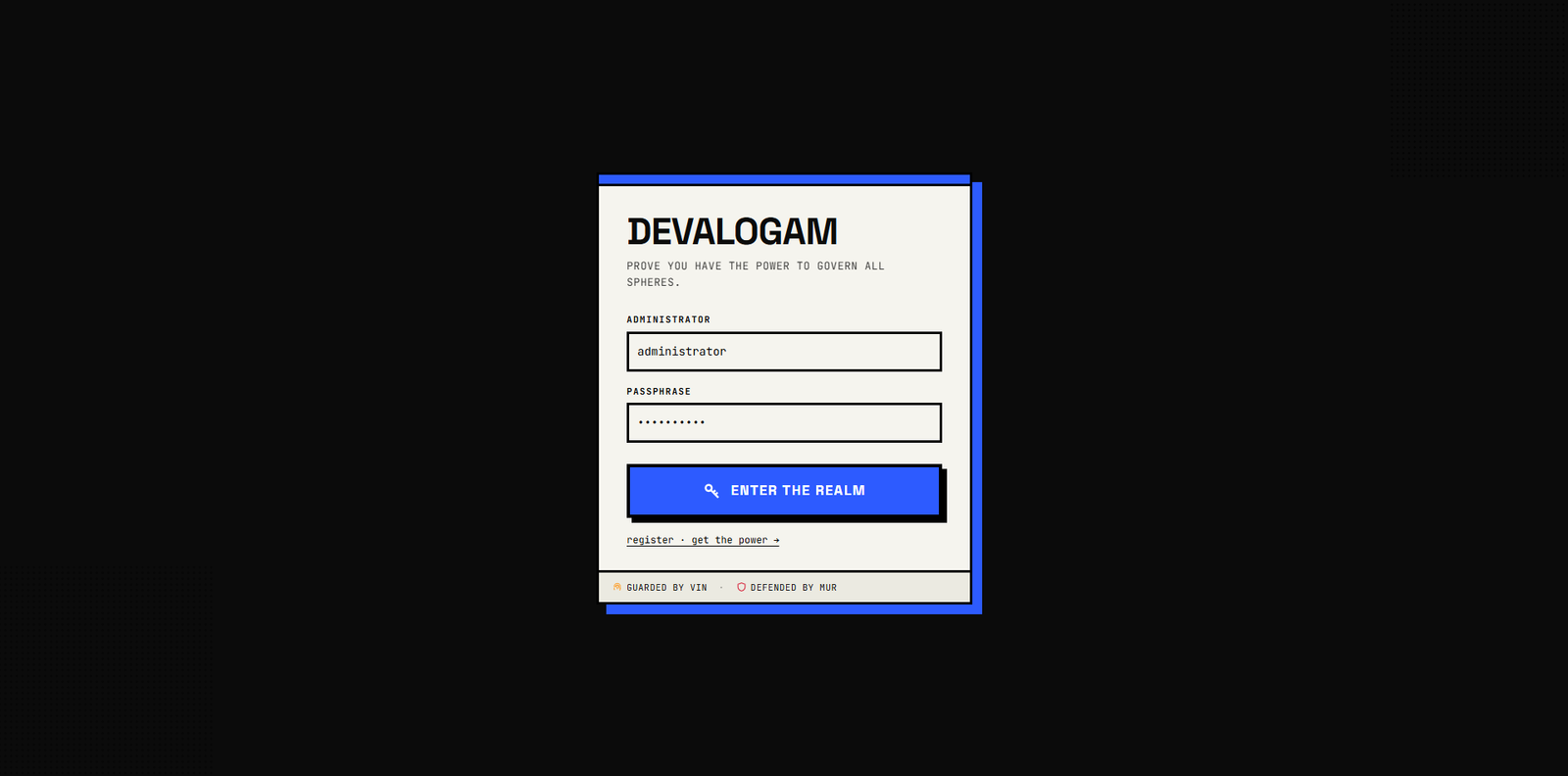
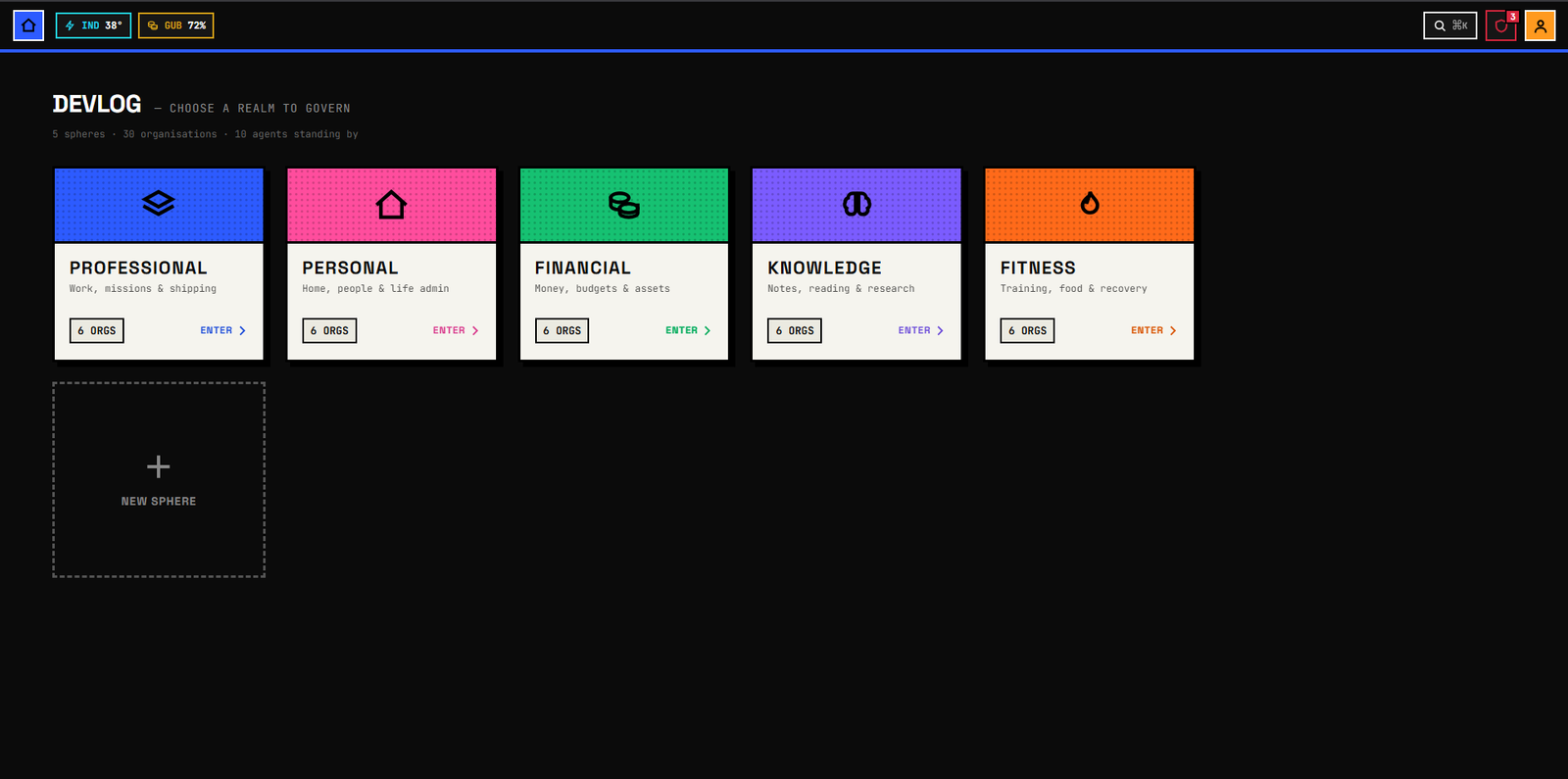
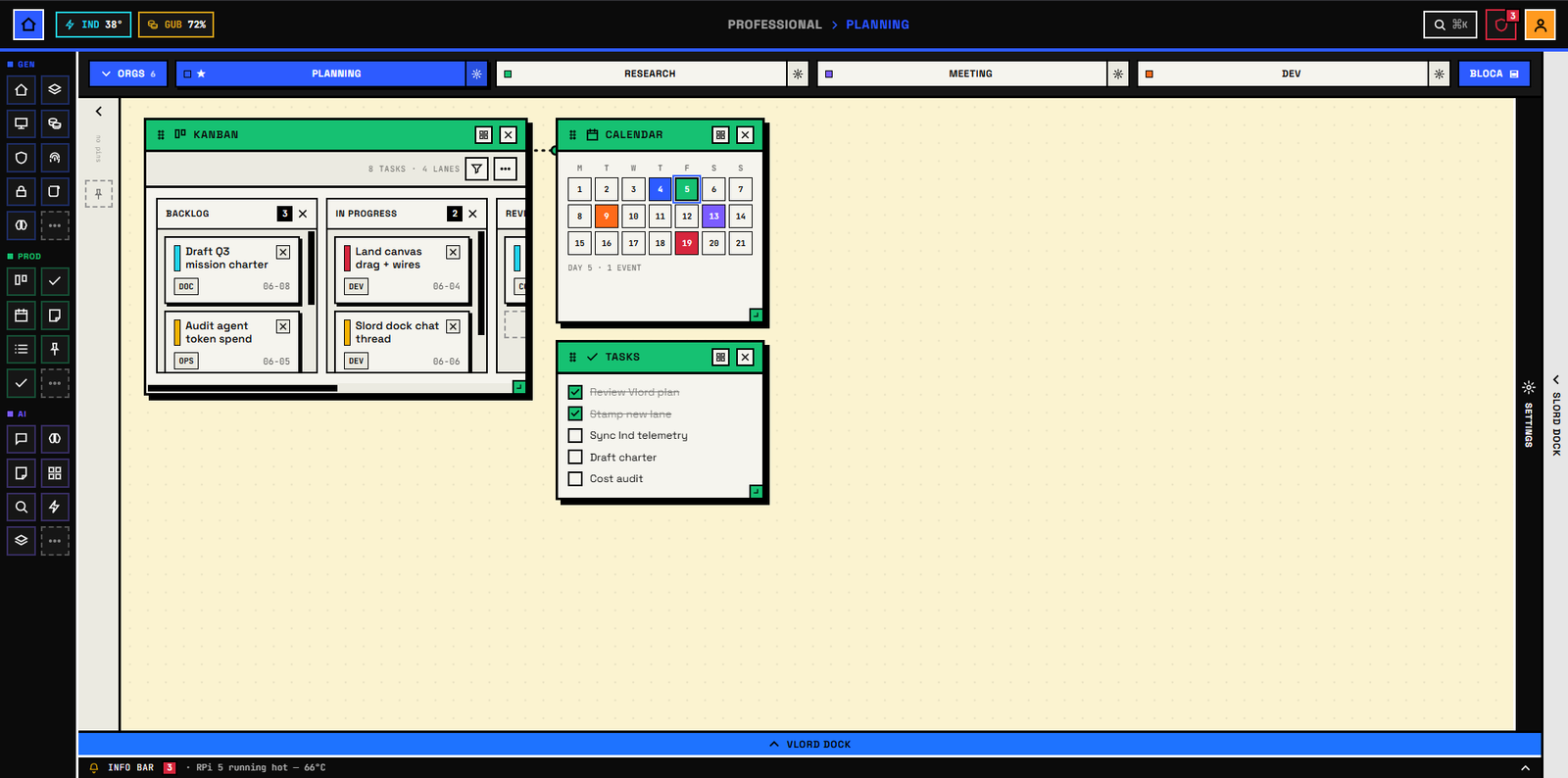
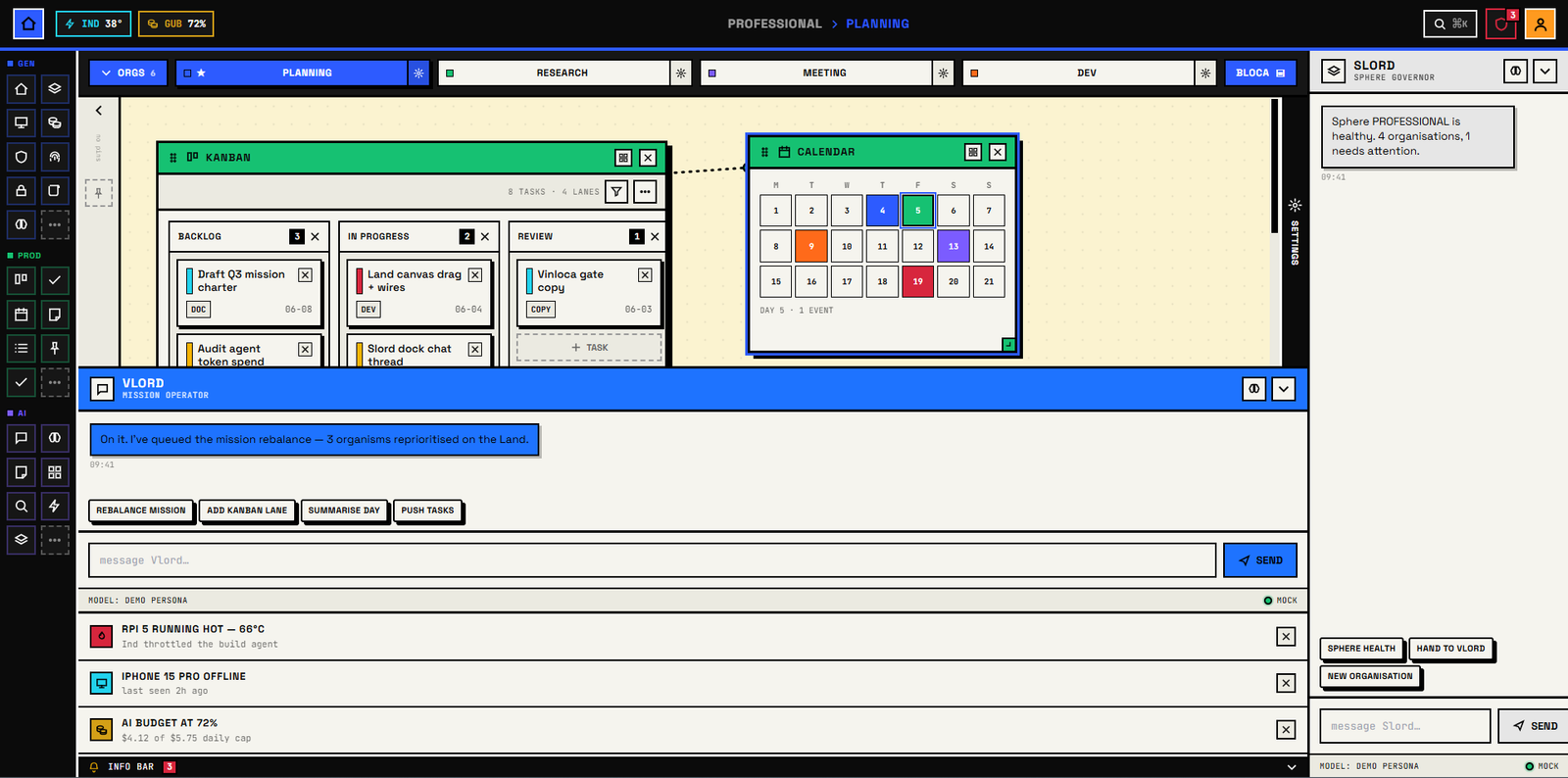
A neobrutalist, self-hosted AI operating environment that organizes my whole digital life into five Spheres, governed by a pantheon of ten AI agents. It runs always-on on a Raspberry Pi (the body) while the AI thinking lives on a separate Mac mini (the swappable brain) — fully private, reachable only over my own Tailscale network.

01The ProjectAudio intro
The full story — architecture, the ten agents & the stack · + 3 more episodes

The one fact that shapes everything: a Raspberry Pi 4B can't run a serious AI model. So Devalogam splits into a body and a brain. The body — web app, API and database — runs on the always-on Pi. The brain — a large language model — is kept remote and swappable (Ollama on a Mac mini by default, with Ollama Cloud, Claude or Gemini as fallbacks). The dashboard is fully usable with no brain at all: Kanban, Tasks, Calendar and Notes work entirely on the Pi, and the AI features simply light up when a brain is reachable.

The load-bearing component is Gub — an LLM router and meter. It health-checks providers in priority order, returns the first reachable one, fails over automatically, and meters every call for budgeting. Configuration, not code, picks the brain: switching from the Mac mini to Claude to a future bigger server is a one-line .env change, never a rewrite.

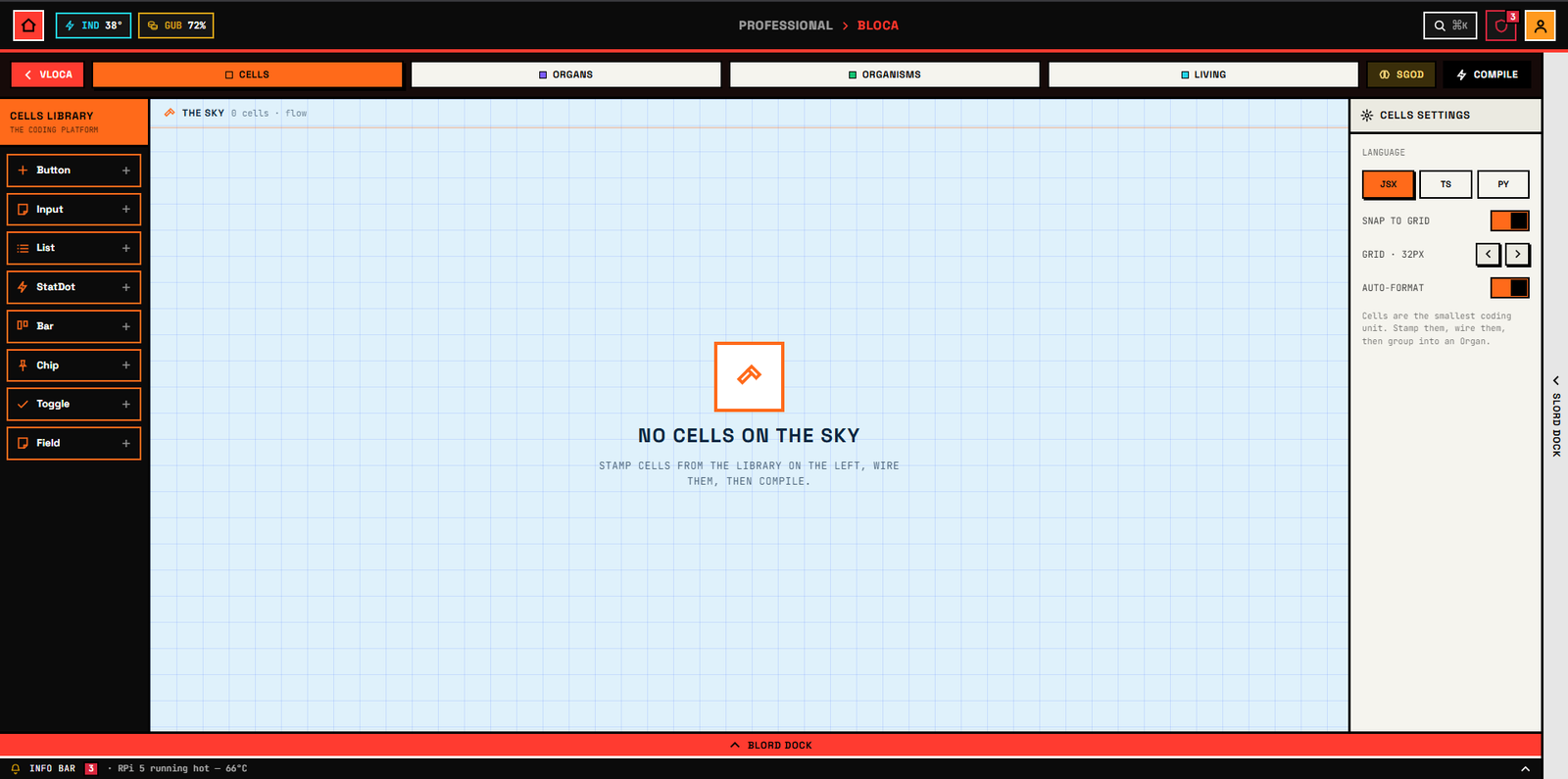
Capabilities grow like biology. An organ is a reusable function with a typed contract; an organism composes organs into a tool (Kanban, Calendar); a living organism is a running instance rendered as a card on the Land. One task organ feeds Kanban, Tasks and Calendar — implement once, compose three ways. A pantheon of ten AI agents (modeled on Hindu deities) governs the realm, all sharing one runtime and differing only by persona, data scope and tools.

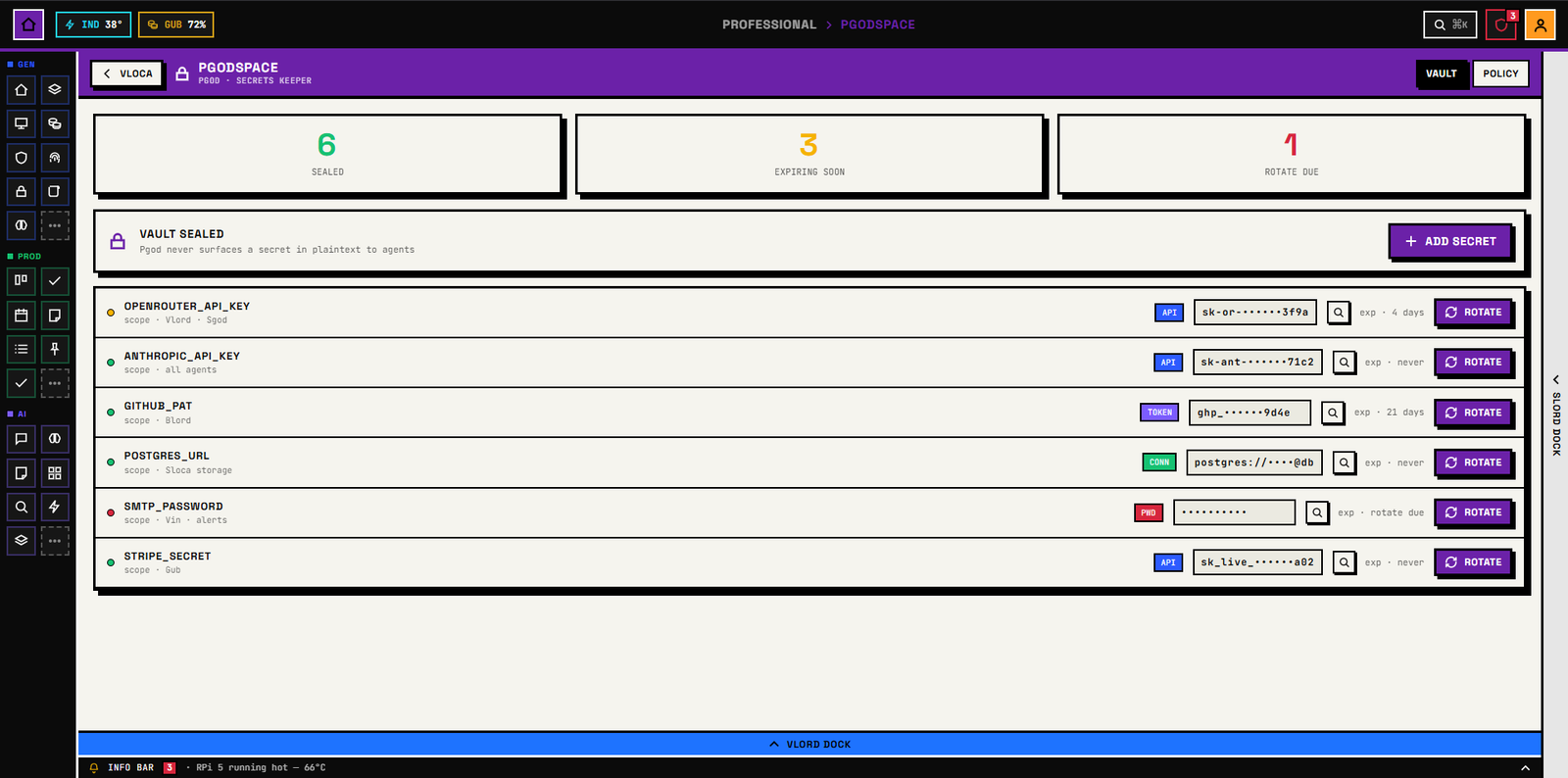
Stack: a pnpm monorepo — a React + Vite PWA, a Fastify API, PostgreSQL 16 with pgvector — all behind a single Caddy reverse-proxy on one origin, packaged as Docker Compose. Security is Tailscale-only: nothing is exposed to the public internet, secrets never leave the Pi or reach the browser, and the whole system moves to a beefier host by copying a folder and a database dump.

Proves: end-to-end product ownership of a private AI platform — architecture, swappable-brain resilience, security posture and portability.
More episodes
02The Tech Stack
03The AI Architecture
04Impact & AI Thinking
ReactTypeScriptFastifyPostgreSQLpgvectorDockerOllamaTailscaleCaddyPWALocal-first AINeobrutalism
Self-hosted · Tailnet-only · In active development
02 / Personal · Gamified productivity SPALive2026
2026

DORKprod

Gamify your whole day

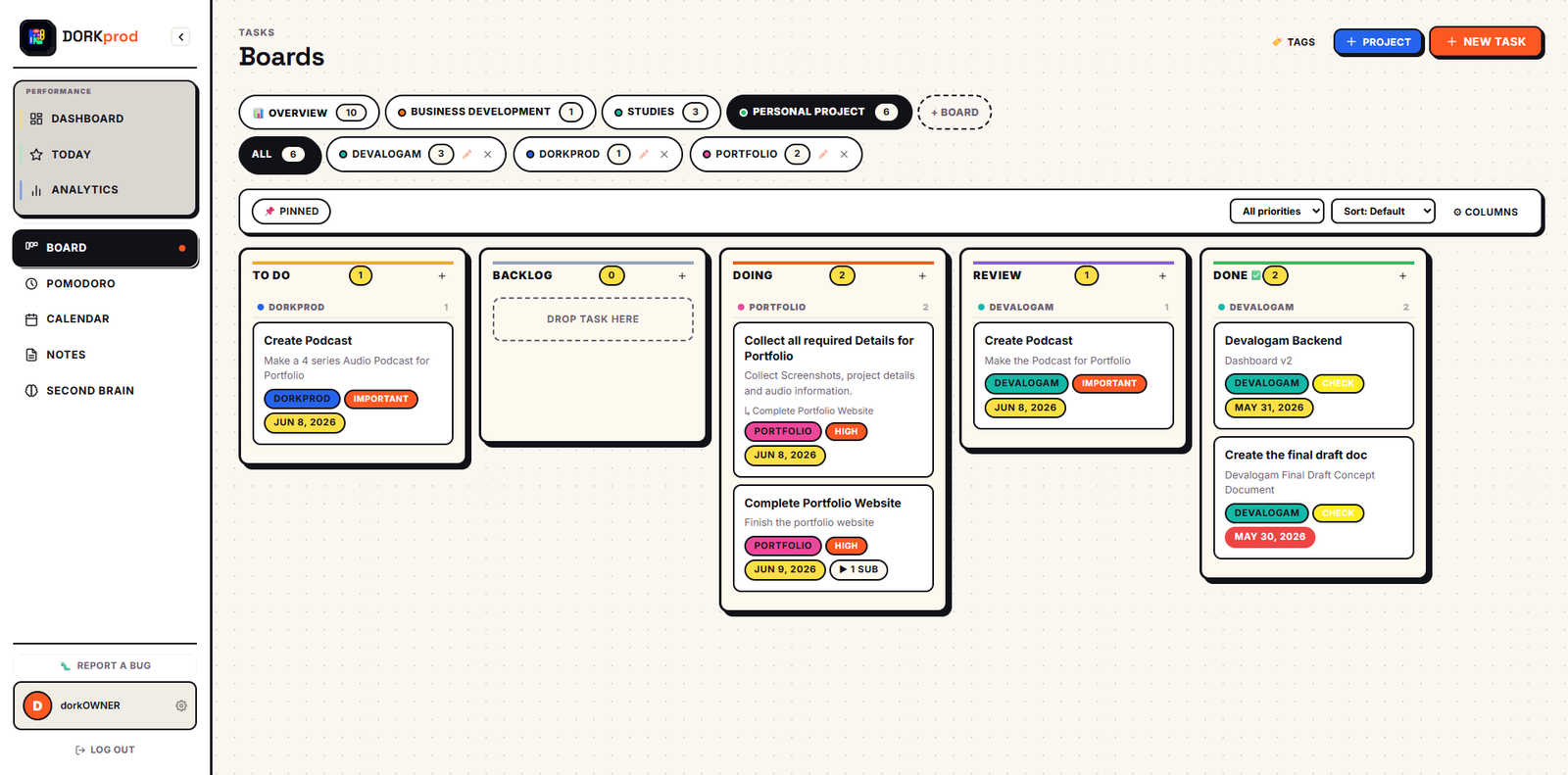
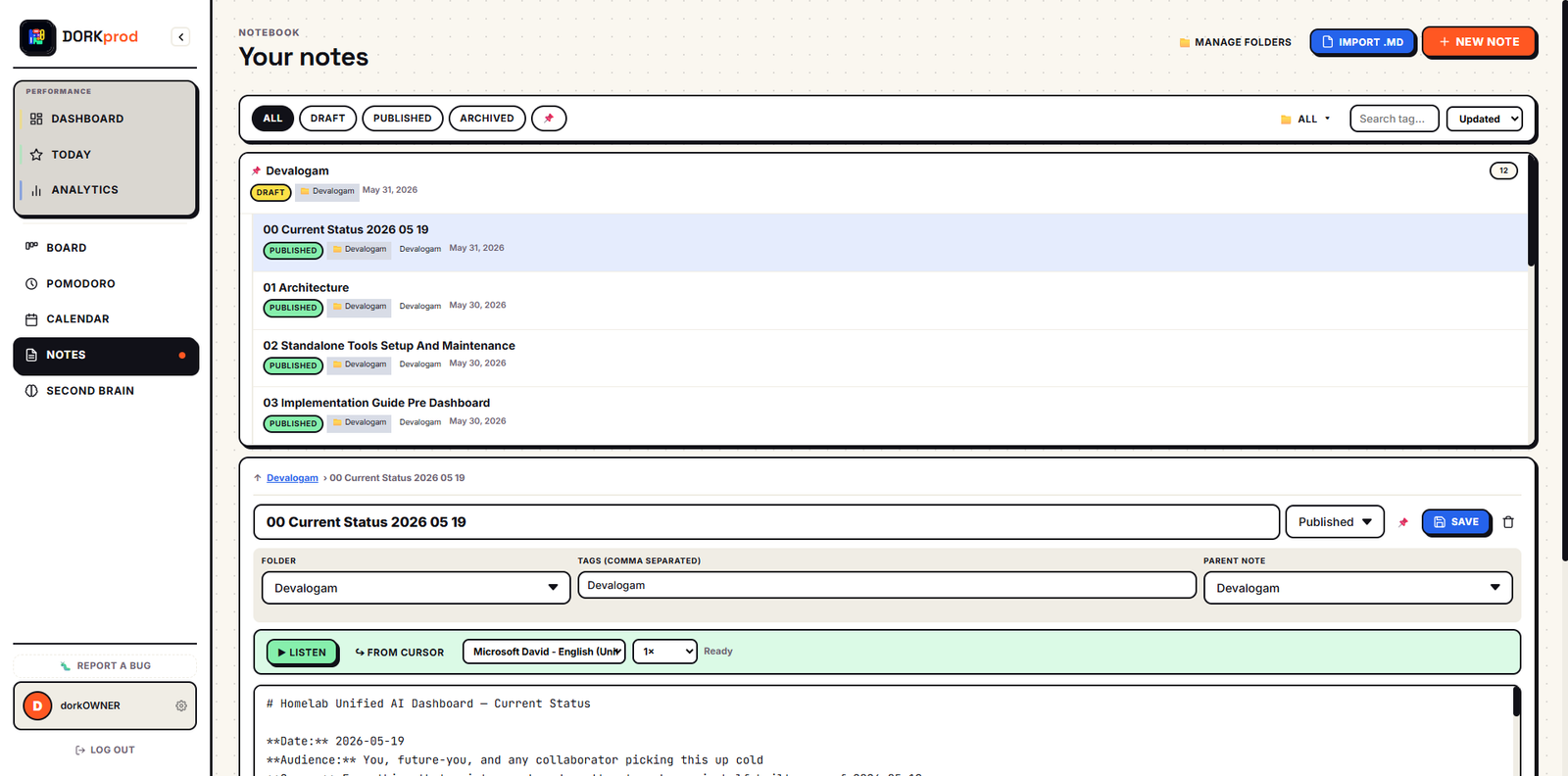
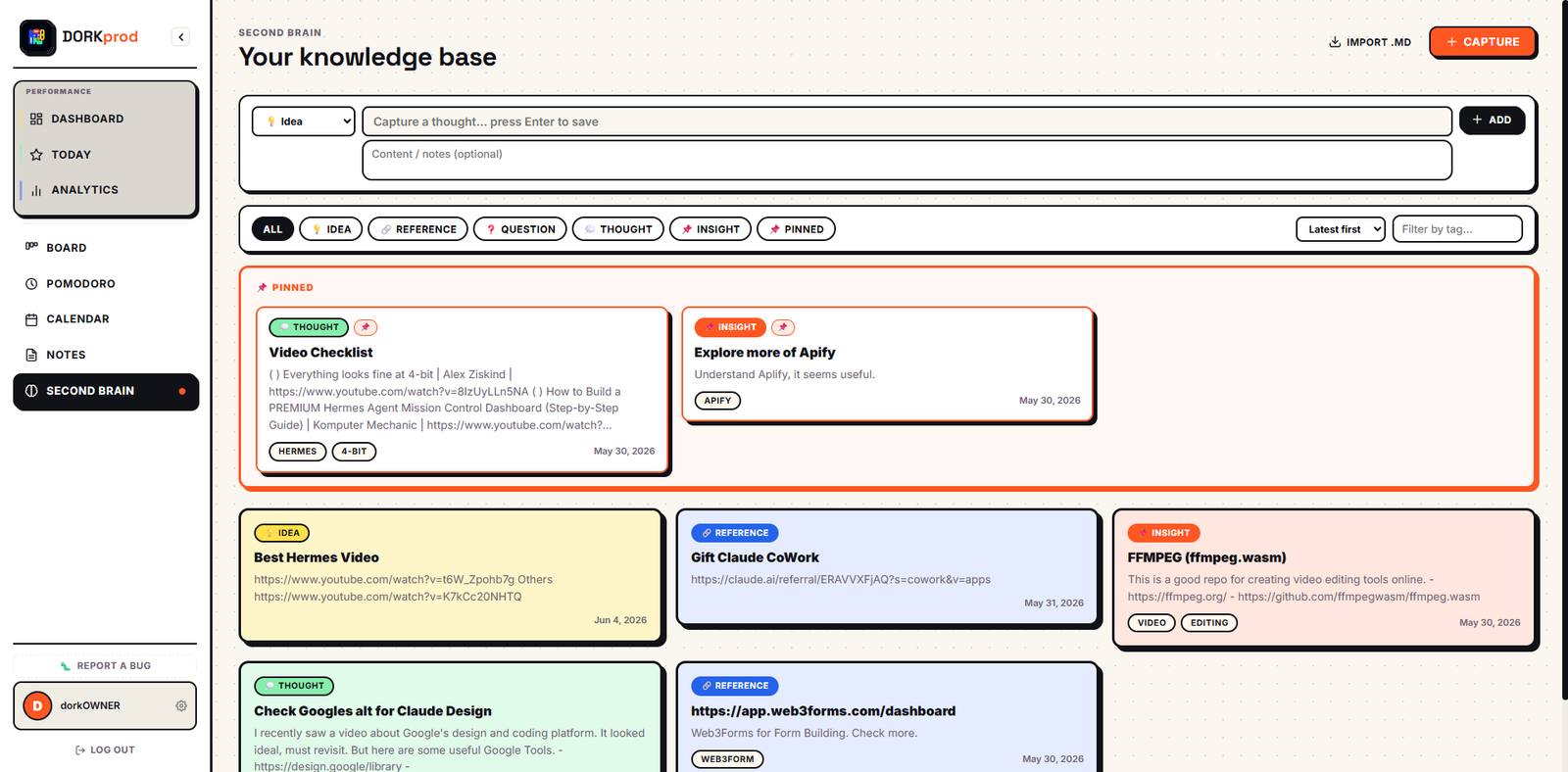
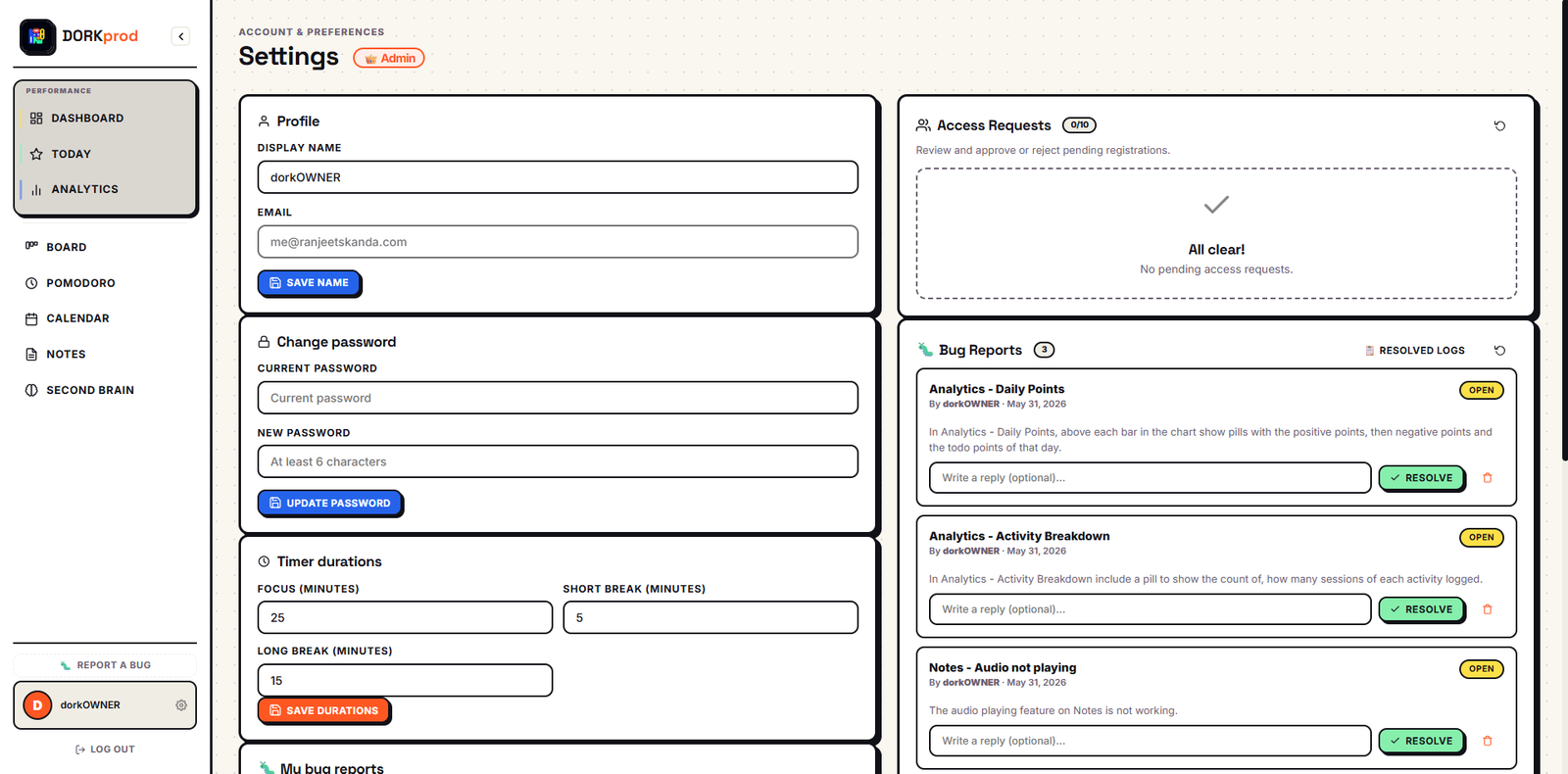
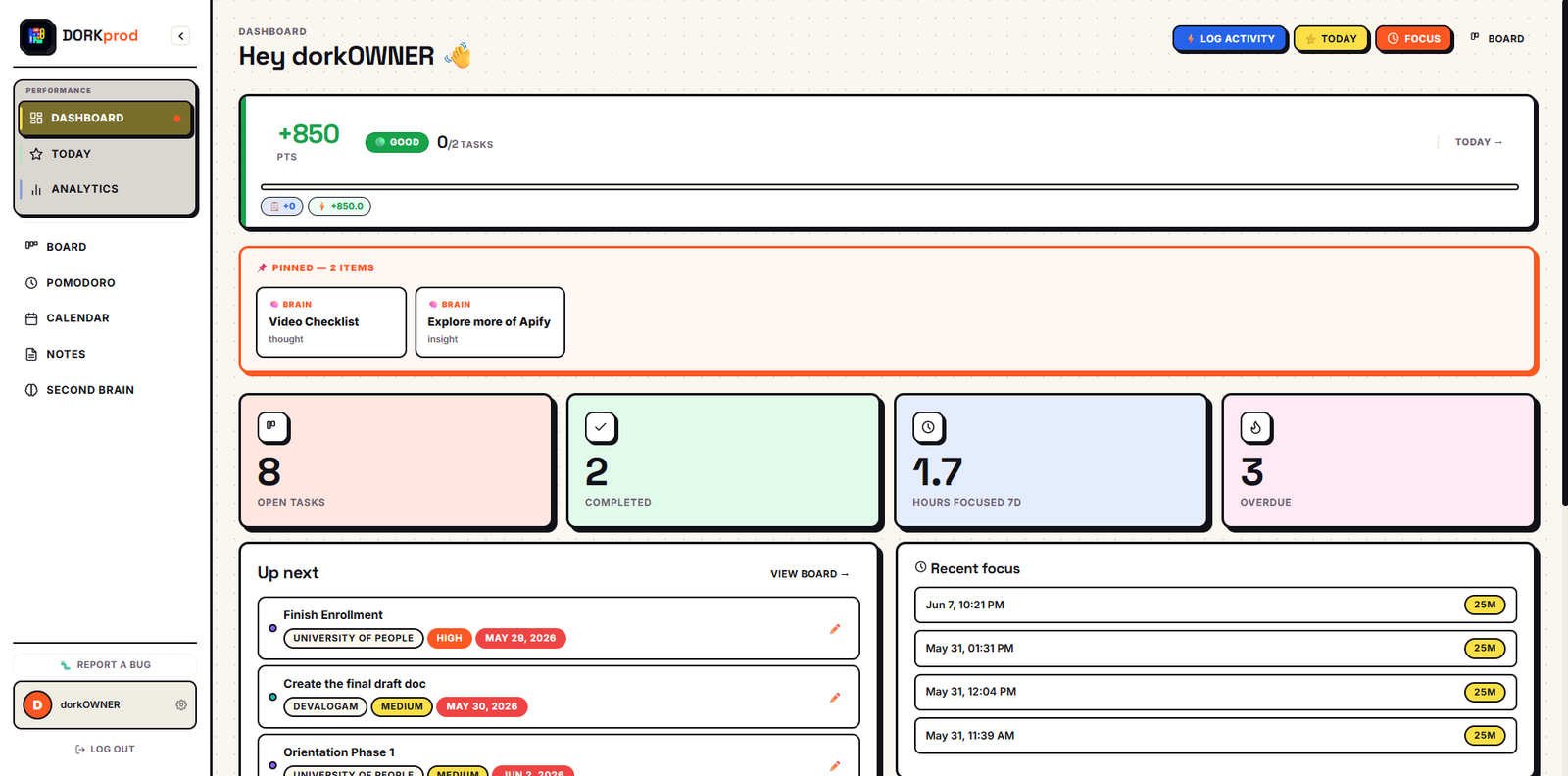
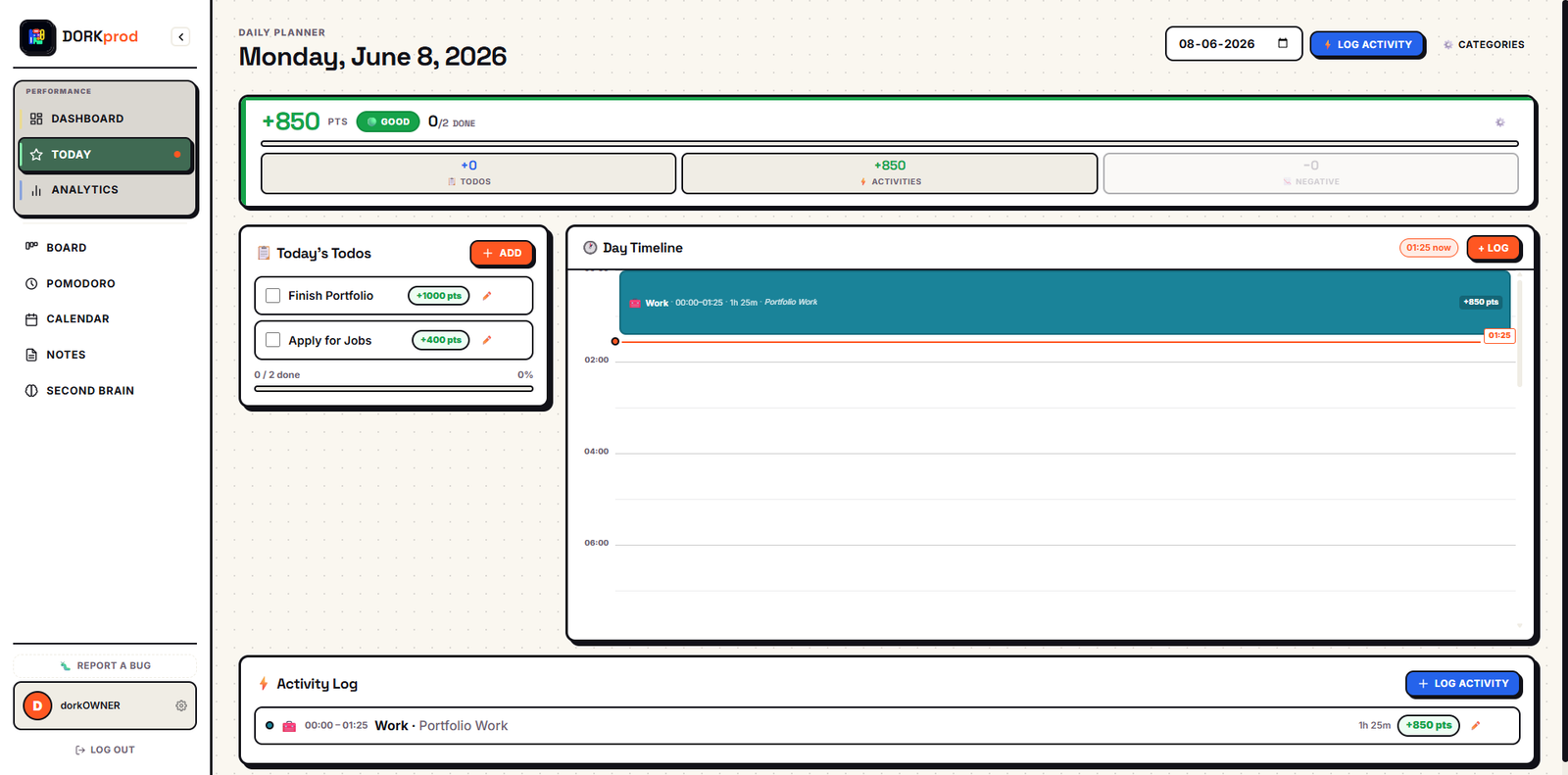
A brutally focused, gamified productivity suite that turns your entire day into a single, scoreable number. Eight tools — Kanban, a daily planner, Pomodoro, analytics, calendar, notes, a second brain and a habit tracker — unified by one points economy where productive actions earn points and time-sinks subtract them.

01The ProjectAudio intro
The full story — the scoring engine, the zero-dependency build & the stack · + 3 more episodes

Everything feeds one number: today's score. Todos carry a point value you set and bank on completion; activities are time blocks tagged with a category that has a points-per-minute rate and a positive/negative flag — Deep Work might be +10/min, Doomscrolling −20/min. The day's net total maps to one of 13 configurable, color-coded tiers, from 💀 Catastrophic to ⭐ Legendary. Negative scoring is the point: most apps ignore the cost of wasted time; DORKprod puts it on the ledger so a day can't lie to you.

It's a strict separation of concerns: PHP 8 + MySQL handle data and auth only — a clean REST-style JSON API, no HTML rendering — while the entire single-page app (router, views, charts, drag-and-drop, text-to-speech, audio) is hand-written vanilla JavaScript with no framework and no build step. A two-way link ties the Today planner to the Kanban board: checking off a linked todo automatically moves its board task into the Done column, eliminating double-bookkeeping.

Security and operations are first-class: PDO prepared statements everywhere, hardened httponly/strict-mode sessions with ID regeneration, bcrypt password hashing, and every query scoped to the authenticated user's ID so users can only ever touch their own data. Access is deliberately invite-only — prospective users apply with a reason, and an admin approves or rejects from a built-in panel. Static assets are cache-busted by file modification time, so a plain upload to commodity shared hosting always serves fresh code.

Proves: full-stack product ownership on a conventional web stack — a novel mechanic, a secure normalized API, and a polished dependency-free front end.

More episodes
02The Tech Stack
03The Engine & Architecture
04Impact & The Builder
PHP 8MySQLVanilla JSSPAKanbanPomodoroWeb Speech APIZero-dependencySelf-hostedNeobrutalism
PHP · MySQL · Vanilla JSprod.dorkcompany.com

Group B

Professional Projects

Paid work delivered for clients — kept off the public record.

Confidential

Client work, under wraps

These are professional projects I delivered for clients through my Business Development Agency, DORK Company. The work is covered by client confidentiality, so I keep it out of a public portfolio — but I'd be glad to walk you through the specifics, the outcomes and my exact role in person or during an interview.

Let's discuss them in an interview

Group C

Portfolio Projects

Four open-source, local-first, bring-your-own-AI web apps — designed, engineered and built end to end, each live on GitHub as a public repository. Start with the combined audio deep-dive below, then open any project for its own story, podcast and access links.

Audio deep-dive · all four projects

The Portfolio Projects — Combined Deep Dive

One conversation across all four apps — the shared philosophy (local-first, privacy-first, bring-your-own-AI) and what makes each one distinct. Prefer one at a time? Each project below carries its own individual deep-dive inside the expanded section.

Combined Deep DiveAll 4 projects
03 / Business intelligenceOpen source
MIT · Live

Bus In

Local-first BI for startups & scaleups

An open-source, local-first business-intelligence dashboard for the metrics that matter to startups — MRR, ARR, runway, net dollar retention, CAC payback, funnels and cohorts — with a natural-language AI analyst you bring yourself. No accounts, no SaaS lock-in; your board metrics never leave your machine.

Deep dive & audio · how it works

Bus In ships understanding the vocabulary of growth — recurring revenue, retention, runway, efficiency ratios — instead of being a blank charting tool. On top of the curated metrics sits an AI analyst you own: natural-language Q&A, auto-generated insights and anomaly detection, an AI report builder, and AI-commented forecasting — all powered by your model (OpenAI, Anthropic, Gemini, or a fully local Ollama / LM Studio), so confidential board numbers are never sent through a vendor.

It's a client-side SPA: all metrics, computations and AI orchestration happen in the browser, with pluggable storage (memory, localStorage, or a self-hosted KV server you control) and real-data ingestion via CSV or HTTP/JSON. Built with TanStack Start, React 19, Recharts and TypeScript, it deploys as a static bundle to any host at near-zero cost.

🎧Bus In — Deep Dive
TanStack StartReact 19TypeScriptTailwindRechartsLocal-firstBYO-AIMIT
MIT · GitHub Pages
04 / In-browser video editorOpen source
MIT · Live

Edi ma

A whole video studio in a browser tab

A real video editor that runs 100% in the browser via FFmpeg compiled to WebAssembly — trim, crop, caption, color-grade, picture-in-picture, chroma key and export, with no uploads and no accounts. Your footage never leaves your device.

Deep dive & audio · how it works

Edi ma drives the actual FFmpeg engine compiled to WebAssembly — edits aren't toy approximations, they're the same operations professionals use, executed locally. Footage never leaves the device: no upload step, no render farm, no account. When the page is served cross-origin-isolated it automatically loads the multithreaded core for 2–4× faster encodes, and transparently falls back to the single-threaded core otherwise.

Every edit can be saved as a serializable .chop.json recipe — a human-readable, replayable, version-controllable description of the whole edit history. A real multi-track timeline (video / audio / text tracks with drag, zoom, snap, split and ripple-delete), color grading, overlays, chroma key and captions round it out. As an installable PWA it caches the ~31 MB FFmpeg core once and then runs fully offline.

🎧Edi ma — Deep Dive
ffmpeg.wasmWebAssemblyTanStack StartReact 19IndexedDBPWAMIT
MIT · Installable PWA
05 / Recovery & habit toolkitOpen source
MIT · Live

Ene me

Reclaim yourself — privately

A private, account-free recovery & habit-reset companion — streaks, a panic button, CBT thought-reframing, an AI urge coach, voice journaling, meditation and therapist-ready exports — all running on your own device by default.

Deep dive & audio · how it works

Privacy is the architecture, not an afterthought: local-first by default, with optional self-hosted sync, and no server in the loop unless you deliberately add one. The toolkit is built for the hardest seconds of an urge — a panic button with breathing guidance, a crisis mode with a mandatory 60-second pause before a relapse can even be logged, and a guided post-mortem that turns a setback into data.

An AI urge coach and CBT-assisted reframing use your provider and your keys, calling the model directly from the browser. A one-click therapist pack exports a structured multi-week PDF of mood, craving, CBT and relapse data — turning private self-tracking into something genuinely useful in a clinical session. (Ene me is a self-help tool, not medical advice.)

🎧Ene me — Deep Dive
TanStack StartReact 19TypeScriptjsPDFWeb Speech APIPWALocal-firstMIT
MIT · Local-first
06 / Job-hunt command centerOpen source
MIT · Live

Sel me

Your job search as an operating system

A privacy-first job-hunt command center that turns a chaotic search into one organized pipeline — kanban tracking, AI-tailored resumes, cover letters, interview prep and analytics — with your CV and notes living on your own device.

Deep dive & audio · how it works

Sel me treats a job search the way it actually is — a sales pipeline — and unifies applications, resume versions, cover letters, interview notes and a calendar of next steps into one keyboard-driven workspace. Its defining stance is data ownership: by default everything lives in your own browser; sync is an optional feature you point at a server you control. Your CV, salary expectations and recruiter conversations never pass through someone else's cloud.

Per-job tailoring is a first-class action: import a Word resume, maintain base versions, then create per-job overrides and export them back to .docx and PDF with the original layout preserved. Keyword matching highlights gaps against a job description, AES-256-GCM encrypts backups, and a ⌘K command palette drives the whole app. Built with TanStack Start, React 19, Zustand and TypeScript.

🎧Sel me — Deep Dive
TanStack StartReact 19TypeScriptZustandmammoth / docxIndexedDBAES-256-GCMMIT
MIT · GitHub Pages

Group D

Self-Initiated & Community Work

Outside formal employment — publishing, social enterprise, disaster relief and community building. These shaped how I work long before any of the products did.

07 / Publication2016 — 2020
2016 — 2020

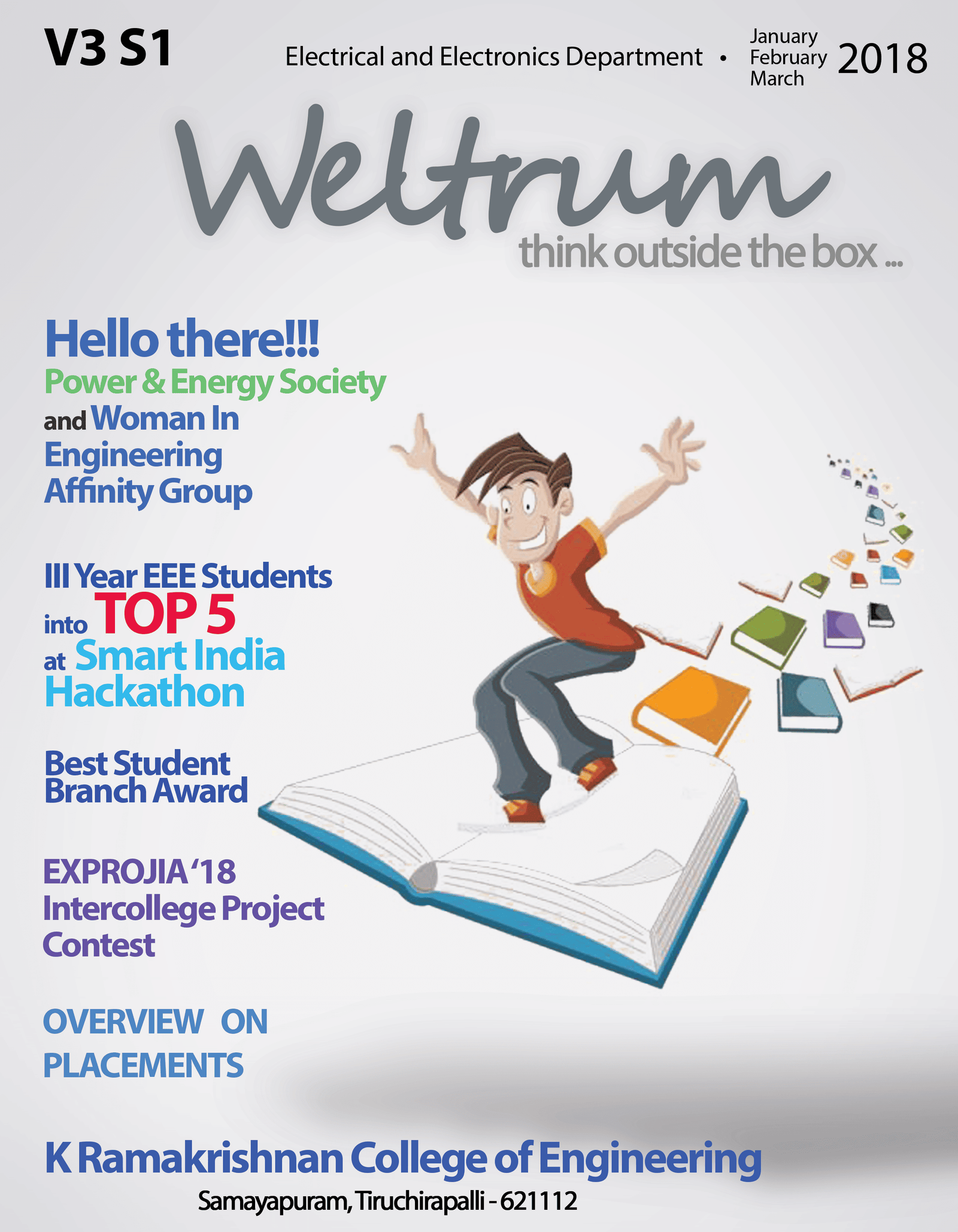
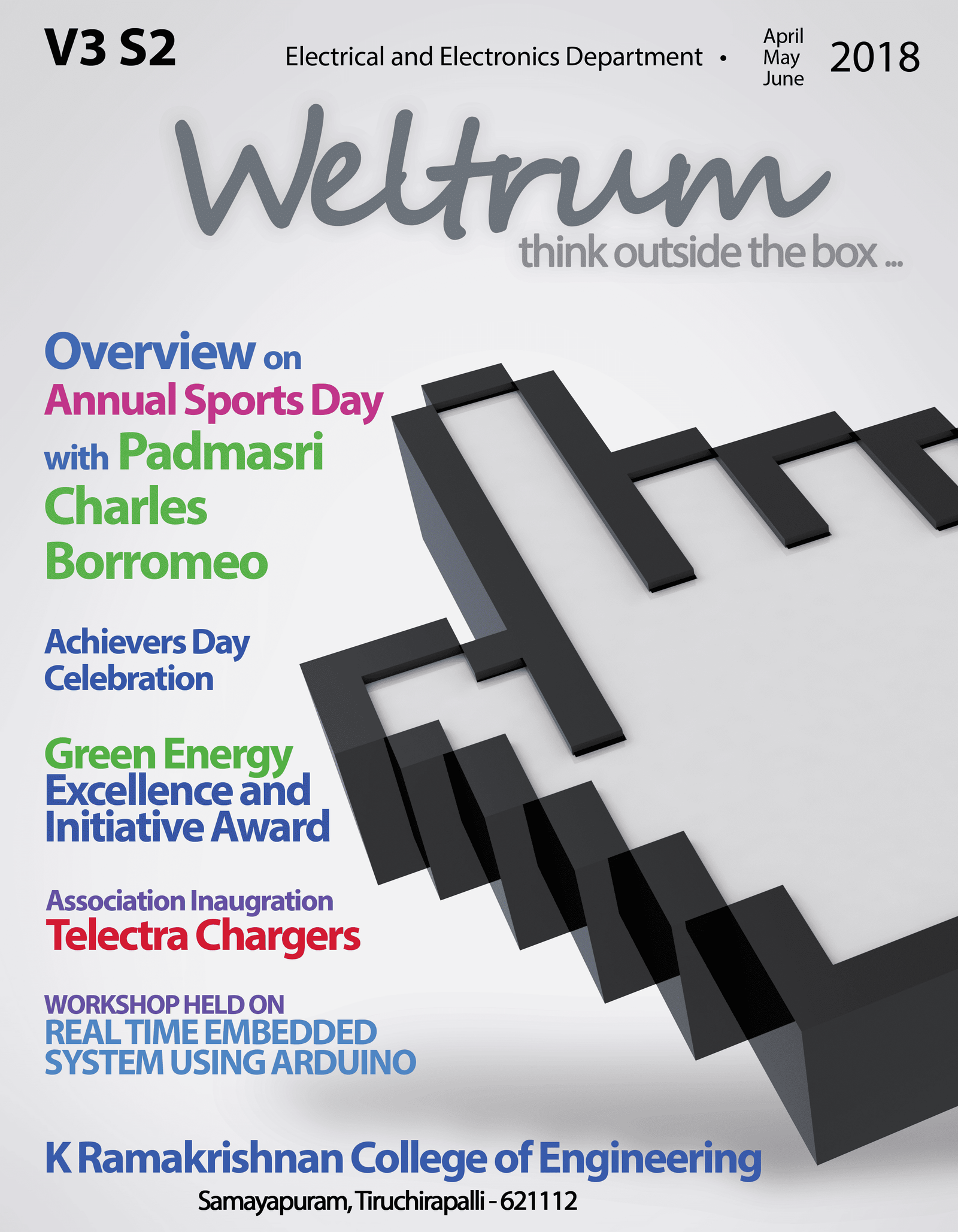
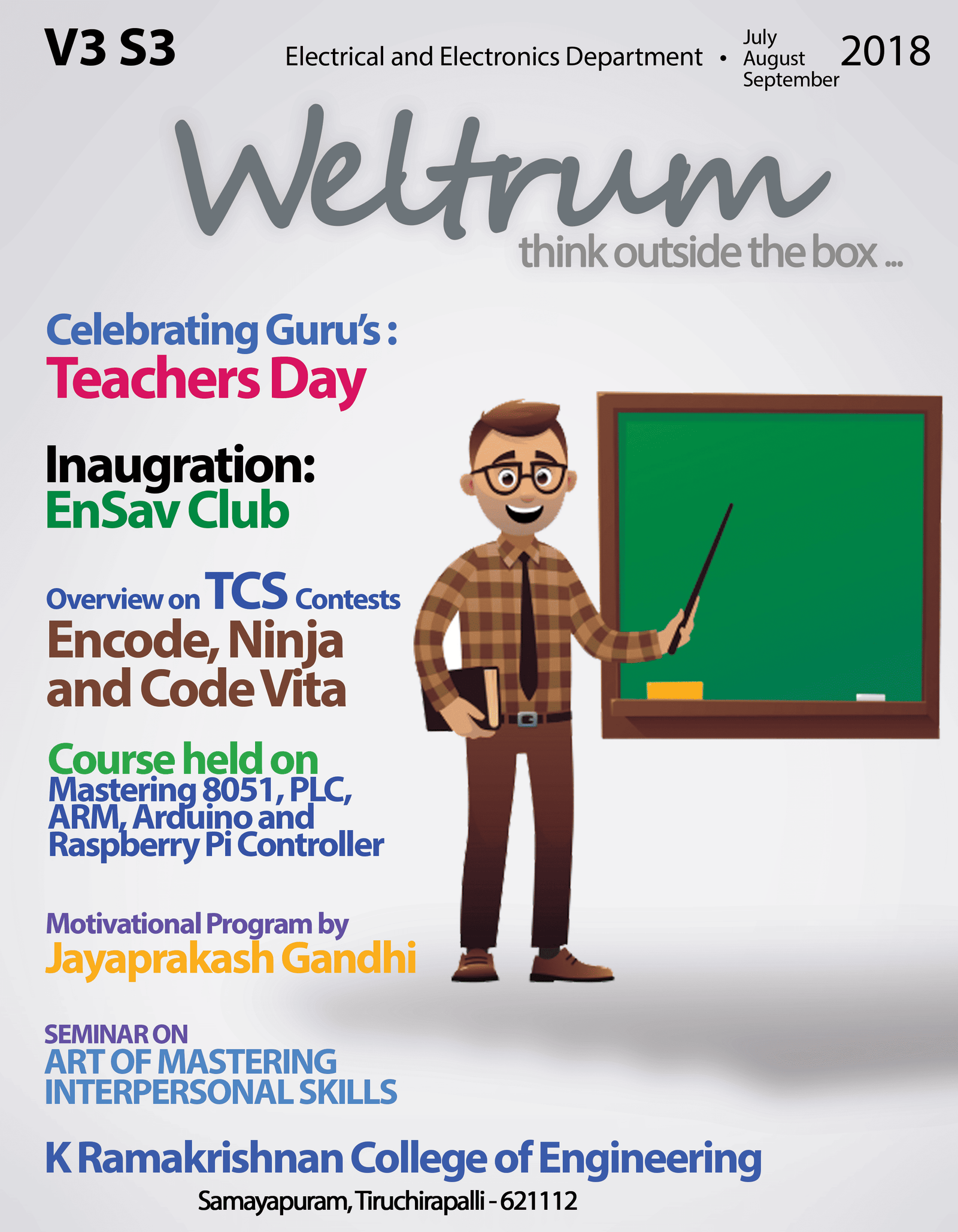
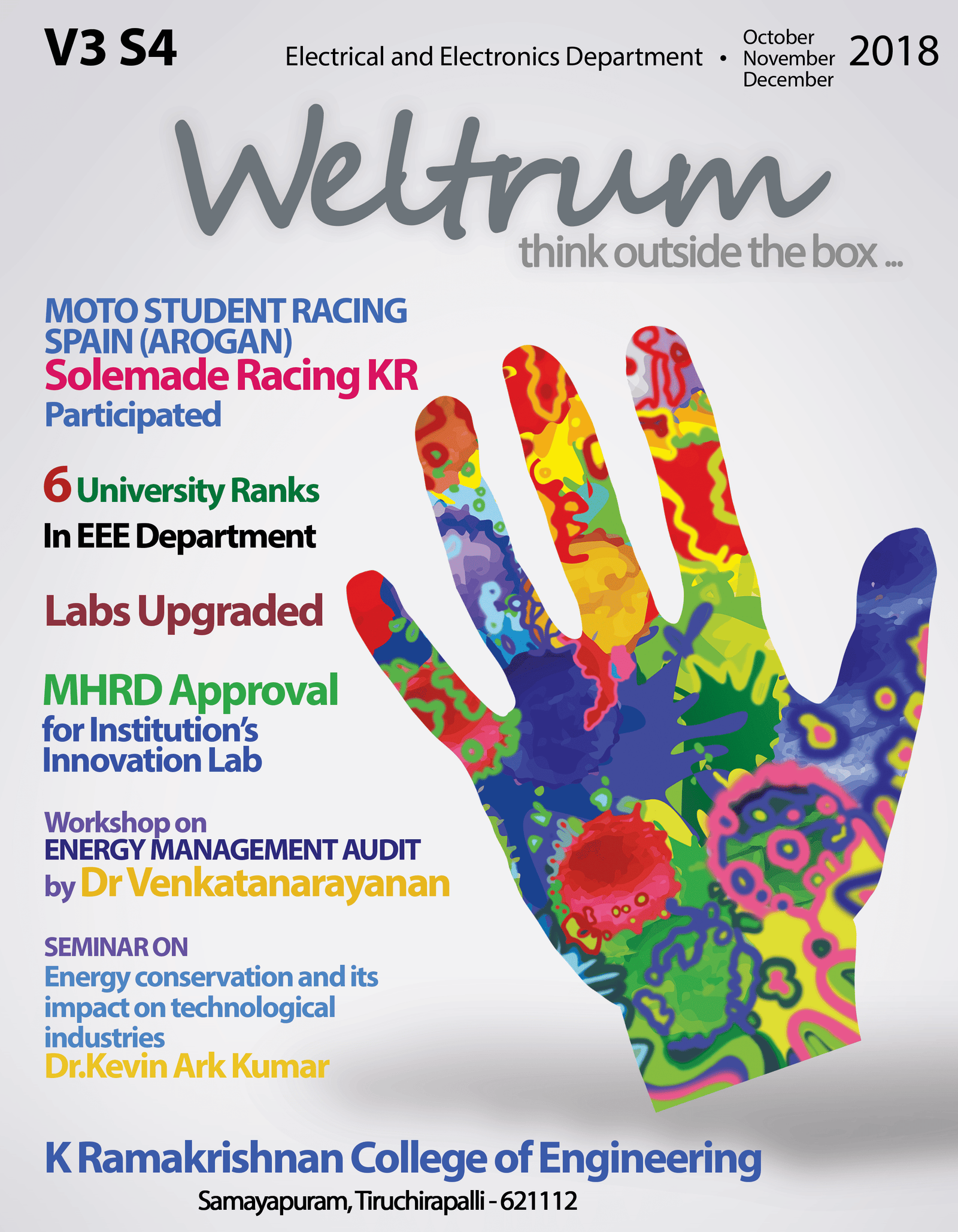
Weltrum

Founder & Chief Editor

Founded the first-ever departmental magazine at my college. Built the editorial team, set the visual direction, and published the first issues — the initiative reached senior management and established me as an institutional figure.

PublishingEditorialTeam building
College magazine · first of its kind
08 / Social enterprise2018 — 2020
2018 — 2020

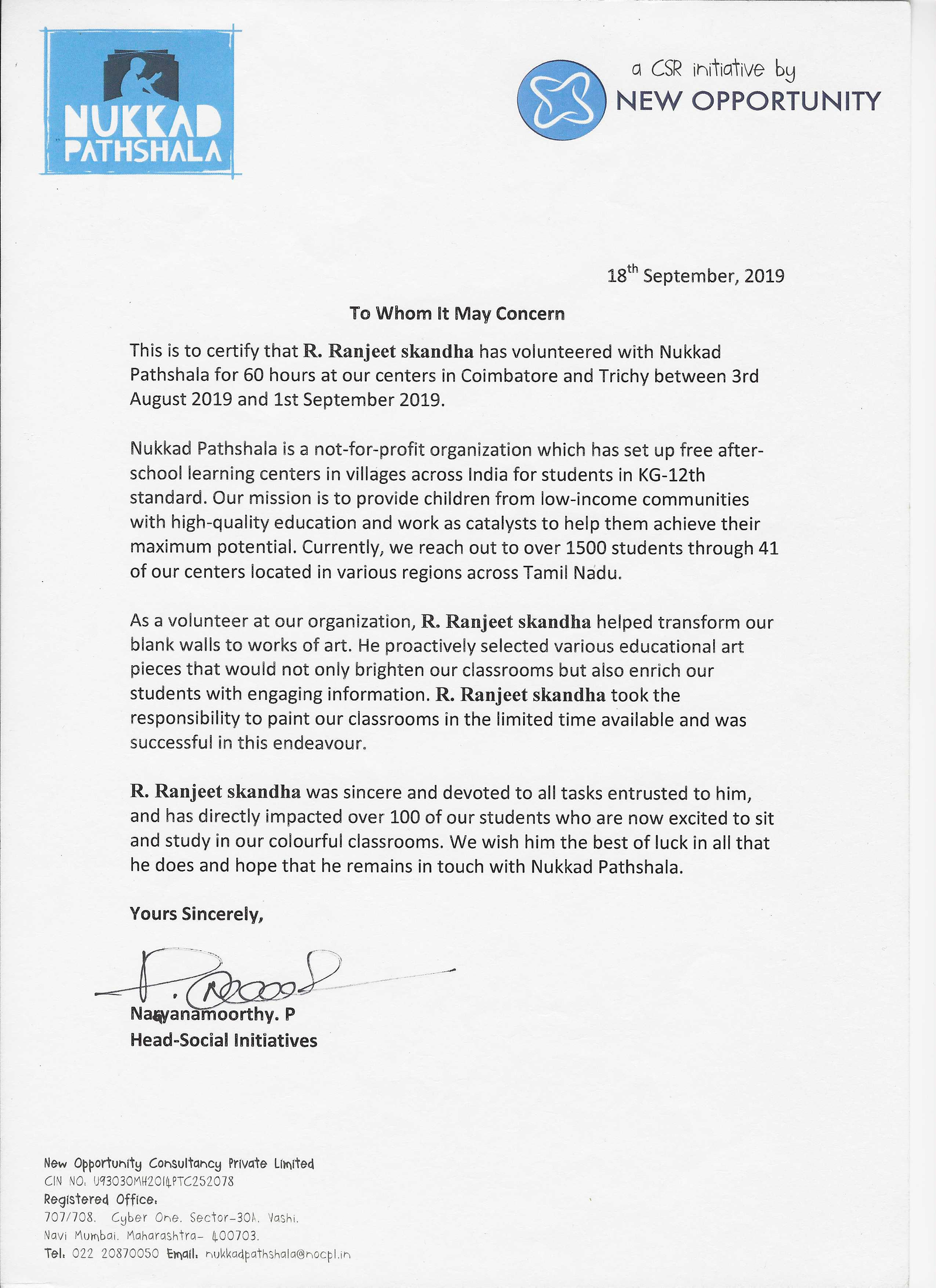
Artopathy

Co-Founder

Artopathy — social work recognition certificate
Social-work recognition · click to enlarge

A student-led social enterprise for educational-infrastructure development in underserved Tamil Nadu communities. Ran fundraising events, coordinated material drives, and partnered with schools that nobody else wanted to work with.

Social impactFundraisingEducation
Tamil Nadu · Underserved schools
09 / Disaster relief2018
2018

Gaja Cyclone Relief

Field Coordinator (volunteer)

Video not loading? Watch on YouTube

On-ground coordinator during emergency response across Tamil Nadu's coastal villages after Cyclone Gaja. Organised supply logistics, family-by-family welfare checks, and the unglamorous spreadsheet work that actually makes relief work work.

Emergency responseLogisticsVolunteer
Coastal Tamil Nadu · Nov 2018
10 / Community2024 — 2025
2024 — 2025

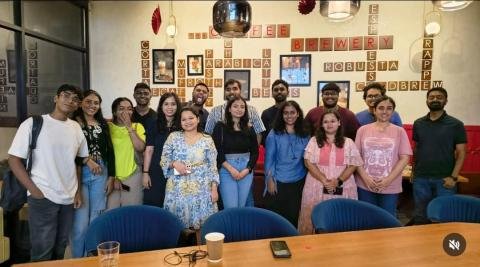
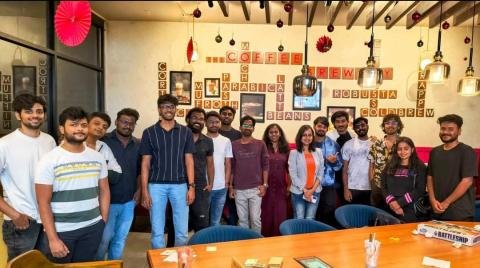
Bengaluru Board-Games Nights

Curator & Host

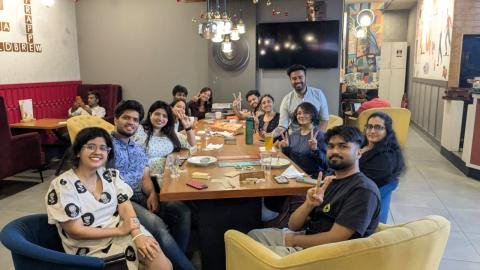
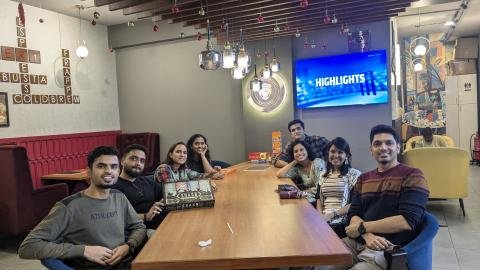
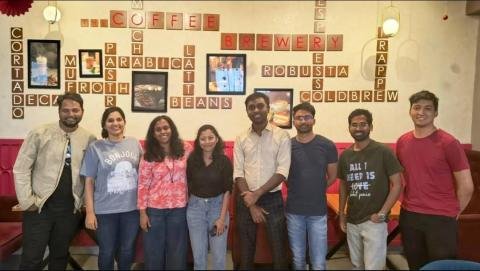
20+ ticketed nights at cafés and pubs across Bengaluru — half community-building, half side-channel pipeline for DORK. The events outlived their commercial purpose: a few of those tables are still meeting weekly.

EventsTicketedBengaluru
20+ events · ~10 ppl each